
Sanitation in Mathare

PictureThe Mathare Valley Slum

Sanitation is arguably the biggest problem facing residents of the Mathare Valley slum. Lack of appropriate facilities practically cripples its inhabitants, and severely disrupts daily activities. Any visitor to the slum is overwhelmed by the sights and smells of the community, and not in a good way.

There is no formal garbage collection or disposal system in the slum. As an “informal settlement”, there is no formal anything in the slum, with the entire area appearing as blank space on official maps. The lack of garbage collection means that the ground is layered in garbage, of all kinds. It piles alongside the main road, into the river, and becomes a feeding ground for goats, chickens, and stray dogs. Aside from the obvious and serious health concerns, the odor quickly becomes unbearable in the hot sun.

Perhaps the most severe sanitation issue in Mathare is the complete lack of toilets. In recent years, local MPs have built several latrine stations, but residents must pay to use them. That’s right, each time they need to use the toilet, its going to cost them 5KSH.


“I have four children, how am I supposed to pay for them to go to the bathroom so many times every day? I only make about 100KSH. It is not possible.” –  mother in Mathare.

Picture

Since they realistically are unable to use the existing latrines, residents often relieve themselves in the narrow lane ways that snake between homes. Often a bucket will be used inside, and tossed outside when it is full. The “flying toilet” is one of the most common methods – do your business in a plastic bag, tie it closed and watch it fly. Again, the health concerns are severe, and water borne diseases are rampant. 

The Nairobi River runs through the middle of the slum, and has become a dumping ground for ‘flying toilets’ and garbage alike. The water is a muddy brown, and yet people still wade through it to search for plastic or bits of metal that could be reused. 


Did you know that it costs 5KSH for residents to use public latrines in Mathare?

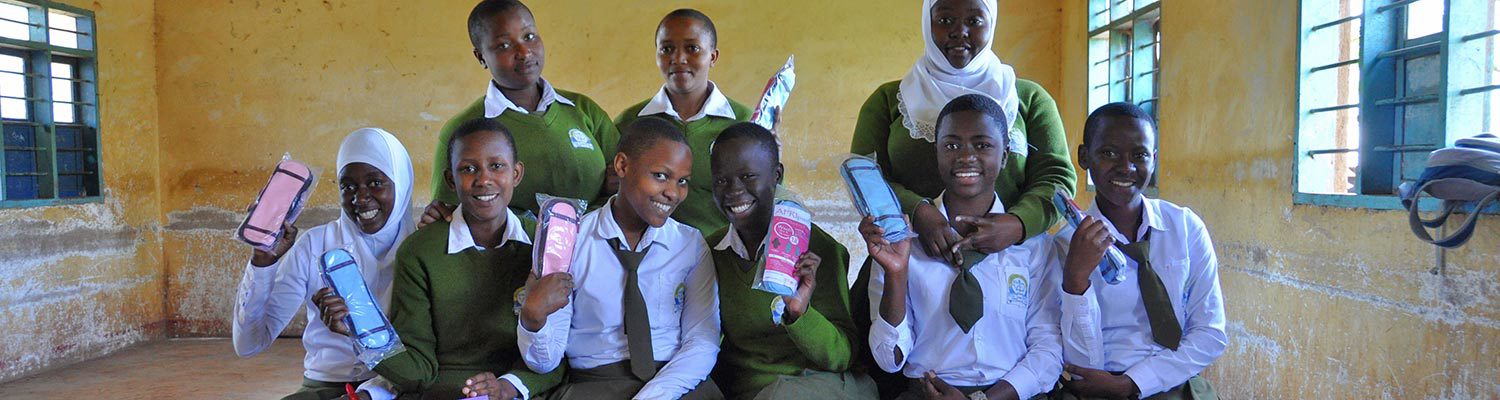
Now, let’s talk about menstruation and sanitation. Women create massive amounts of waste during their period when they use sanitary pads, and in places like Mathare, the only place for it to go is the River. Young girls and women face enough challenges living in Mathare, can you imagine what it would be like to have your period in such a place? To not have a latrine to clean yourself, or even a place to discreetly dispose of the evidence? 

The issue of sanitation may be the most pressing issue faced by residents of Mathare, and it must be addressed immediately. To ignore the lack of toilets, water sources, and garbage disposal methods is to ignore their right to a life lived with dignity. Not only does the lack of sanitation create severe health problems, but it makes daily life that much more difficult. 

Sabrina Rubli

Celebrating Malala Day

Yesterday, Malala Yousafzai turned 16 years old, and the world celebrated with her on the newly designated Malala Day.

She wore a pink headscarf that once belonged to the late Benazir Bhutto, Pakistant’s first female Prime Minister. Standing in front of over 1,000 students from around the world, and UN officials, Malala declared that education was the only solution to improving lives.

Picture

Born in Pakistan’s northwest province, Malala grew up in an area where the Taliban frequently banned girls from attending school. In 2009, at age 14, Malala wrote a blog post about life as a young girl under Taliban rule, and her wishes for education. The following year a New York Times film crew made a short documentary about her story. Malala’s fight for education grew, and she became a prominent education activist in Pakistan, winning her country’s first National Youth Peace Prize.

In October 2012, the Taliban tried to silence her, and she was shot in the head in a failed assassination attempt on her walk home from school. She remained in critical condition for weeks, before being flown to the UK for further medical attention. The Taliban continued to call for her death.


Picture

But the threats against her and her family’s life did not slow down this young woman. In fact, she used her high profile case as a platform to fight for a woman’s right to education. Now, barely eight months after her attack, Malala celebrated her 16th birthday by speaking at the United Nations Youth Assembly in New York City.

Her speech was a powerful reminder of the strength, courage, and hope that lives in the hearts of youth today. 


“The terrorists thought that they would change our aims and stop our ambitions but nothing changed in my life except this: Weakness, fear and hopelessness died. Strength, power and courage was born…They thought that the bullet would silence us, but they failed. Out of that silence came thousands of voices.”

She mentioned that she learned how to fight passionately and forgive graciously from the example set by Nelson Mandela, Mahatma Ghandi, Martin Luther King, and Mother Theresa, among others. 

Education has never been a high priority for Pakistan. According to UN statistics, the Pakistani budget spends about $4.5 billion on its military, and less than $400 million on education. When families are unable to send their children to school, they often turn to the free madrassas, which often teach radical ideology that opposes the education of girls, fueling a cycle of misogynist violence.

Picture

“We call upon all the governments for free compulsory education, all over the world, for every child … Expansion of educational opportunities for girls in the developing world”

“Do remember one thing. Malala Day is not my day. Today is the day of every woman, every boy, and every girl who have raised their voice for their rights.”


“Here I stand, one girl among many. I speak not for myself, but for those without voice can be heard. Those who have fought for their rights. Their right to live in peace. Their right to be treated with dignity, their right to equality of opportunity, the right to be educated.”

Picture

Malala’s words were powerful, and delivered with a quiet, and passionate strength that moved listeners to tears. This is the beginning of a journey that will not end until every girl in Pakistan, and the world has the freedom and opportunity to attend school. World leaders are listening, and Malala presented Mr Ban Ki-Moon, Secretary General of the United Nations with a petition in support of 57 million children who are unable to attend school. 

Happy Birthday Malala, you are an incredible inspiration to every student, activist, and leader in the world. Your courage in the face of unimaginable fear and danger has moved a generation to action. We wish you a wonderful year filled with as many successes as you deserve. May we all follow in your example, and continue the fight for education!

Read the full text of her speech here. 


Sabrina Rubli

The 2013 G(irls) 20 Summit

Picture

The G(irls) 20 Summit was born out of unmistakable evidence that investing in girls and women is a key driver of economic productivity worldwide.

This year, the conference was held in Moscow, Russia, where the delegates discussed the “opportunities gained when business, economic and social policy is conceived of and structured in a way that maximizes a woman’s productive ability, and opportunities lost when global investment in girls and women is overlooked.” In short – the importance of investing in women, and ensuring they are able to participate in the economic market.

Three components were identified as critical to the economic advancement of women:

1.       Economic decision making
2.       Economic self-confidence and efficacy
3.       Access to critical economic resources

These factors can only become reality when women and girls have the freedom to achieve their potential. However, currently only one in five girls in developing countries are able to complete primary school, and according to the WHO, 39,000 child marriages occur every day. If this trend continues, women and girls will never be given the option of pursuing a career, or even an education.

The delegates of the summit outlined clear and attainable steps for world leaders to take to effectively reduce forced child marriage, and open up economic opportunities for women.

 “It is imperative that governments worldwide, led by the G20 nations, acknowledge and take proactive steps to improve the potential for women to be economically viable in every society around the globe.”

Women can no longer be ignored and dismissed as intelligent and participating citizens of the world. Time and again it has been proven that women and girls are the catalyst to successful development, and the issue of economic independence is essential. Without

The delegates of the G(irls) 20 Summit outlined their recommendations for the G20 nations in an inspiring Communique published at the end of the summit. Their recommendations can be read in full here.

These young, powerful women are incredible examples of what can be achieved when the world listens to a woman.


Sabrina Rubli

Best Place in the World to be a Woman?

Picture

Today is Canada Day, and we are reminded again of how lucky we are to be women in this beautiful country. Canadian women enjoy rights and freedoms that most women wouldn’t even dream of. 

But which country is the BEST country to be a woman?

According to the World Economic Forum’s Global Gender Gap report, the top country for women is Iceland, and it has been since 2009. Scandinavia rounds out the top four with Finland, Norway and Sweden coming closely behind. Canada is currently ranked 21.

Egypt has the world’s smallest gender wage gap, only 18 cents. By comparison, Canadian women only earn 73 cents for every dollar a man earns, ranking us 35th. You may be surprised to learn that the country with the most female politicians is Rwanda, where women hold 45 of the 80 Parliamentary seats. Canada ranks 45th, as men outnumber women in politics by a ratio of 3 to 1. Only 27% of Canadian politicians are female.

Japan has the longest life expectancy for women, at 87 years compared with 79.2 years for Japanese men. Canadian women can expect to live about five years longer than men. In Afghanistan and Lesotho, women don’t expect to celebrate their 50th birthdays.

According to Forbes, China has the highest number of female billionaires, and Denmark has the most vacuuming men, where women only do about 50 more minutes of unpaid labour than men. In India, women will do up to five hours more unpaid labour each day than men. Women in India have significantly less access to paid work, but the study also noted than Indian men spent much more time sleeping, eating, and relaxing with friends.

Burundi has the highest number of women in the workforce, at 92%, and in Estonia, female professional and technical workers outnumber men 2 to 1! In Canada, 57% of professional and technical workers are women.


Picture

The safest place to have a baby in the world is Estonia, with the world’s lowest maternal mortality rate (2 for every 100,000). Chad is the most dangerous place to give birth, with 1,000 in 100,000 deaths.

Germany offers the best benefits to stay-at-home moms, allowing 14 weeks off at 100% of their wages. Both parents have the option of 3 years of parental leave in total. In Canada, parents are allowed 52 weeks of maternity leave in total.

According to a 2011 United Nations study, women in Georgia experience the least amount of sexual and physical abuse, at only 5%. Canada proudly came in second place in this list at 7%. In Ethiopia, these numbers are particularly high, with 71% of women experiencing physical and/or sexual abuse in her lifetime. 41% of women in Sierra Leone were beaten by their husbands for refusing to have sex.

In the Democratic Republic of Congo, rape and sexual assault has become a weapon of war, and some reports state the as many as 80% of women (and men) in the Kivu provinces have been sexually attacked.

Women in French Polynesia can expect to stay single the longest, with the average age of marriage being 33 years. In both Mali and Niger, women will likely be married while still a teenager. Norway is the top country to live as a single mother, according to UNICEF. Romania placed last.

While Canada may not be the best in every category, women here enjoy incredible benefits, and are much luckier than most women and girls around the globe. Happy Canada Day!

Sabrina Rubli