
Female Genital Mutilation

One of the most shocking and destructive rituals in the world is the practice of Female Genital Mutilation (FGM), which is performed in varying degrees on little girls, mostly before the age of 8 years old. The operation removes part of, or all of, the external female genitals, in what many claim to be an attempt to control a woman’s sexuality. There are no health benefits to female circumcision. The tortuous ethnic rite of passage is tied to traditional ideas of honor, marriage, and purity. 

FGM is practiced in 29 countries around the world, according to the World Health Organization (WHO). Most of these countries are in Africa – specifically North-Eastern Africa, East Africa and West Africa, but the practice is wide spread in the Middle East, South-East Asia, and among immigrants in Europe and North America. The WHO estimates that over 150 million world wide are affected by FGM.

There are varying levels of FGM, the least serious being the removal of the clitoris, and the most severe being the complete removal of all external genitalia, and the remaining parts of the outer lips are sewn shut, leaving a small hole for urination. This is referred to as “infibulation”. All levels of FGM are extremely dangerous for a woman, and lead to serious health concerns and pain throughout her life. Sexual intercourse and menstruation for these girls can be extremely painful, and child birth is often a fatal event, as her stitches must ripped open. 

The practice is so embedded in so many cultures, that should a mother decide to let her little girl skip this painful ritual, she would be shunned by society, and never able to marry. This would bring shame to her family, apparently a far worse fate for a woman than having her genitals sawed off. A circumcised girl remains “clean” and “untouched” until her wedding day.

PictureFGM tools found in Kenya

The procedure is traditionally done by a ‘circumcision expert’, which is usually an elderly woman in the village. Because it is most commonly practiced in remote, nomadic communities, the procedure is done without anesthetic, sterile conditions, or medical supervision. 

Sadly, FGM is not confined to practicing countries, as immigrants have brought this aspect of their culture to new homes in Europe and North America. There are reports of families in the UK flying in doctors to complete this ritual on their daughters, or, worse, performing it themselves. In 1982, Sweden became the first Western Country to ban FGM. As of 2013, an anti-FGM legislation has been signed by 33 countries, including Canada. Canada became the first country to recognize FGM as a form of persecution when it granted refugee status to a Somali woman who was fleeing with her young daughter to avoid FGM.

However, it is believed that around 100,000 girls in the UK are currently at risk of undergoing FGM.


Picture

It wasn’t until the mid 1990’s that FGM was finally discussed in the open, and the campaign has been led by former supermodel Waris Dirie. Waris was born in Somalia, and lived as a desert nomad until she ran away from home to escape an arranged marraige at the age of twelve. She underwent infibulation as a little girl, and has suffered the painful consequences her entire life. “When they tried to convince me that God wants this, I said: Did my God hate me so much?”

Waris moved to London, England as a teenager, where she eventually became the face of Revlon, and a world-renowned supermodel. And she has put her fame to good use, becoming a vocal campaigner against the practice of FGM. In 1997, Waris opened up about her experiences in an interview with Marie Clair, and hasn’t stopped the fight since, despite receiving death threats from the Somali community. She has been appointed UN Special Ambassador, and has launched her own foundation, Desert Flower Foundation, to support survivors of FGM, as well as raise awareness and lobby policy makers against this practice. 

In Waris’s native Somalia, approximately 98% of women have been affected by FGM.


Two brave film makers have recently released a documentary about the effects of FGM in Kurdistan, where it is widely practiced. It took them ten long years of research on the greatest taboo to put the piece together. Their film helped have the practice of FGM become outlawed in 2011, and in the past few years, rates of girls undergoing the procedure has fallen by around 60%. 

Sabrina Rubli

The “F” Word

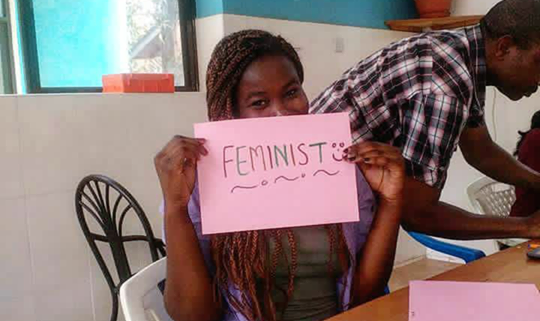
One of my closest friends has just started dating an amazing guy, and was telling me all about their conversations after one of their first dates. Now, this friend of mine is definitely a feminist, and has dedicated her life to helping women, and yet she hesitated, and said “But I don’t want him to think I am a crazy feminist.”

Both of us stopped and looked at each other, and we instantly realized something: when did feminism become a dirty word? Why on earth is advancing women’s rights something to be embarrassed about? Why does “feminism” hold such negative connotations, of crazy women who ought to be put in their place? It’s as though feminists are viewed as these radical beings trying to overthrow society as we know it. And while there has certainly been a revolutionary component to the feminist movement, particularly in some parts of the world, feminists really just want to see justice, finally.

When women identify themselves as feminists, people will often assume they hate men, burn their bras, among other dramatic personality traits.The mere fact that the term “Feminazi” exists is one of the most offensive things in the world – to compare a woman fighting for equality to a genocidal fascist movement? I mean, come on.

Feminism needs to stop being viewed as too radical, too uncomfortable, or Picturetoo out-dated, because that is not what it is. Feminism has stopped being radical, and has settled into the exhausting task of making people (men) realize the inequalities that persist in our society. Women continually make less than their male counterparts. Women are not adequately represented in politics. Calling someone a “girl” is still a sign of weakness for men. Gender inequality is so entrenched in our daily lives we don’t even notice it anymore. Have you ever seen a laundry detergent commercial that does not feature a woman?

British soprano Charlotte Church recently spoke out on the subject of feminism:


“Women who say they are not a feminist annoy me,” says Church. “I don’t really understand why every woman wouldn’t consider themselves as a feminist. Because it’s not a radical thing, you know, this isn’t ‘revolution.’ It’s just to say, yes I’m a woman, I’m entirely aware that I can do everything that a man can do. And I’m proud of that, and I’m proud to be able to tell you about other women who are amazing and do phenomenal things…We were sold a lie a decade ago when everybody said there is no need for feminism: “all is fine, stop ranting and raving you crazy women.” But of course that’s not the case. And I actually think we’re going back, we’re reverting to ridiculous old-fashioned sort of stereotypes of where women should be and what their role should be: “you should just type and don’t make any decisions, just type what the men say.

Picture

As women, we need to declare ourselves feminists. We need to stand up to oppression that has been built into our societal structures, to the point that we don’t even recognize it anymore. We need to stop thinking of feminists as annoying, useless, and whiny. A feminist is just someone who acknowledges that gender inequality exists.

Recent movements such as Everyday Sexism and Who Needs Feminism are helping to bring attention to the need for an updated definition of feminism.


Sabrina Rubli

What Does the Internet Think of Women?

UN Women has just launched a powerful online campaign which uses the world’s most common search engine, Google, to demonstrate just how wide spread gender inequality is. 

The achievement of gender equality around the world would have incredibly effects on the global economy. It is no secret that empowering women and girls leads to an economic boost in their community – increased productivity and growth are just a few consequences of gender equality. And yet, women are woefully left behind around the world, and cultural and traditional norms continue to oppress women. Women lack access to medical care, employment, land ownership, and earn considerably less than her male counterpart.

While we may think gender equality only exist in other countries, UN Women’s latest campaign proves us all wrong.

According to the World Health Organization, one woman dies in childbirth every minute of every day.

In 2008, the United Nations reported that one in every three women is likely “to be beaten, coerced into sex, or otherwise abused in her lifetime

According to the most recent statistics from the U.S. Census, women earn just 77% of what men earn for the same amount of work.

The United Nations often cites the statistic that women do two-thirds of the world’s work, receive 10% of the world’s income and own 1 percent of the means of production.

Despite making up half the global population, women hold only 15.6% of elected parliamentary seats in the world.

Increasingly advanced health technology allows safer pregnancies, but it also allows people in countries such as India and China to abort pregnancies when they discover the baby is a girl. This has led to skewed gender ratios. 

More than 1.5 billion people in the world live on less than one dollar a day, and the majority of those people are women.


Source: United Nations Women Search Engine Campaign 

Sabrina Rubli

International Day of the Girl Child

Picture

On October 11th, the United Nations will lead the world in a day dedicated to the girl child, and the theme for 2013 will be “Innovating for Girls Education”.

“The fulfilment of girls’ right to education is first and foremost an obligation and moral imperative.” There is overwhelming evidence that educating girls, particularly during their teenage years, is a transformative force in societies around the world – “it is the one consistent positive determinant of practically every desired development outcome, from reductions in mortality and fertility, to poverty reduction and equitable growth, to social norm change and democratization.”

“Recognizing the need for fresh and creative perspectives to propel girls’ education forward, the 2013 International Day of the Girl Child will address the importance of new technology, but also innovation in partnerships, policies, resource utilization, community mobilization, and most of all, the engagement of young people themselves.”

No matter how you look at it, education is the most effective solution. The UN lists multiple tools and steps necessary to advance education amongst girls, such as improving transportation methods to help girls attend school, increasing the use of mobile technology for girls in rural areas, corporate mentorship and the revision of school curriculum to reflect a more positive view on women. The complete list of steps can be read here.

Picture

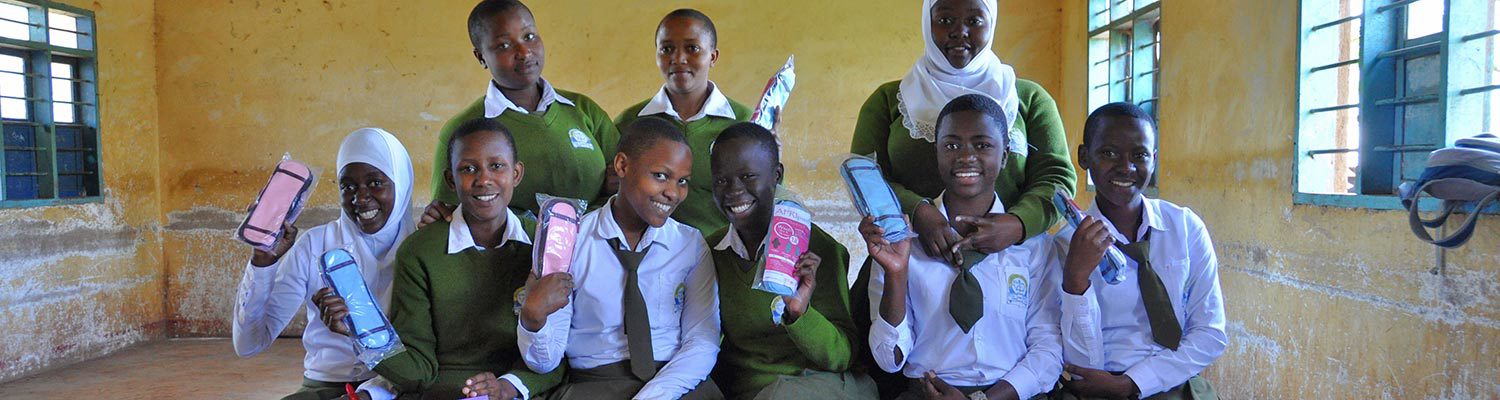
However, we noticed one glaring omission: the UN is not addressing menstruation. 

Menstruation is the number one reason why girls in developing countries miss school. In Kenya, girls will miss up to 20% of the school year because they are unable to attend during her period. Around the world, only 12% of women have access to commercial sanitary products. The need for sanitary products is so great that women and girls will often turn to prostitution to earn the money to purchase pads. In urban slums, schools have no latrines for students to use, and residents must often pay to use the few public latrines.

The UN is right: educating girls at the secondary level is an essential and transformative component in the international development process, and we must ensure that we are removing all barriers. A girl’s body should not be a barrier to educational opportunities, and that is what Femme’s programs are dedicated to.

We believe that if these girls were given the knowledge and tools they need to manage their cycles, school attendance would increase as a natural result. We aren’t just saying this either, our trial projects in Nairobi have proved this. 


Menstruation is one of the root causes of gender disparity, and the faster we break the destructive stigmas and taboos surrounding a woman’s body, the faster we can keep girls in school. To provide girls with the ability to manage their own bodies is to unleash a generation of strong, confident and healthy women.

Read more about the relationship between menstruation and development.

Sabrina Rubli