An Interview with Kiran Gandhi

Picture

Kiran Gandhi made headlines around the world earlier this month when she ran the London Marathon while on her period, choosing to bleed freely instead of use a tampon. In the process, she stood up for women around the world who are so often silenced during their cycles, and inspiring women around the world to start talking openly about their periods. Her actions brought much needed attention to a taboo subject, and helped start a global conversation about menstruation. She certainly inspired Femme’s team!

I was lucky enough to be able to chat with Kiran Gandhi and ask her a few questions about her experience!


Picture

1. What went through your mind when you woke up the morning of the marathon to discover your period had started?

I got my flow the night before the London Marathon and it was extremely painful. It would be my first marathon and I remember already feeling so nervous for it. I had spent a full year enthusiastically training hard, but I had never actually practiced running on my period.

I thought through my options. Running 26.2 miles with a wad of cotton material wedged between my legs just seemed so absurd. Plus they say chaffing is a real thing. I honestly didn’t know what to do. I knew that I was lucky to have access to tampons etc, to be part of a society that at least has norm around periods. I could definitely choose to participate in this norm at the expense of my own comfort and just deal with it quietly.

But then I thought, If there’s one person society can’t eff with, it’s a marathon runner. You can’t tell a marathoner to clean themselves up, or to prioritize the comfort of others. On the marathon course, I could choose whether or not I wanted to participate in this norm of shaming.

2. Why was this an issue you wanted to bring attention to?

Because when you can’t talk about your own body normally, other people can use it to make fun of you. If you can’t talk about your own body, you don’t receive proper knowledge about your own body (e.g. Runnersworld, the well know running mag, only just now put out a piece about menstrual running facts, and they consulted doctors. http://www.runnersworld.com/run-matters/your-midrace-period-questions-answered ). More of those pieces should have been written and they should be as common knowledge to women as how to brush your own teeth. But they aren’t, and to me, that’s a problem. 


Picture

3. How did it feel to run the marathon while free bleeding?

It felt epic. It was the right choice because if you look at my time – we ran the entire marathon consistently, at the same pace from start to finish without stopping. My body didn’t have to worry about interference from a foreign object, or about chaffing, or about having to stop and start which would have been physically and emotionally deflating. Our bodies really had our back, and all of my training enabled us to run strong and finish the race together. 

4. There has been a lot of media attention since the marathon ended, did you expect this?

I could never have expected anything like this, but to me it has become rapidly clear that women around the world have wanted to talk about their own periods and finally had a focal point around which to do so. 

5. What do you hope to accomplish by making this statement?

I want to a) unearth the topic that periods exist, are currently taboo, and shouldn’t be for the aforementioned reasons, and b) use this conversation and gravity around the topic to then consider innovating solutions around periods both here and in developing nations. Moreover, I want to see reform in workplace and school environments whereby women can speak freely about their own discomfort and pain when they are experiencing it. Having to pretend like something doesn’t exist is oppressive. I really do believe that if men had their periods, it would be written into social norms, we’d know when they are in the work calendar, and it would be totally acceptable to postpone meetings or class if too many of the boys or men were experiencing their periods and in a lot of pain.


Picture

6.  How can people get involved in your mission to break the taboo?

1) They can speak in their own communities more confidently about their own periods and bodies, so as to remove the shame of it and encourage other women to take charge and do the same.

2) They can look into incredible companies like SHE Innovates, THINX, Afripads or Saathi Pads – we have a list of partners in the works at the moment – and donate, volunteer or spread awareness about their work.
3) The most exciting one, is to innovate solutions, norms, and ideas that make women’s periods more comfortable for them and more socially acceptable for our communities, both in the western world and abroad!

Sabrina Rubli

5 Reasons Why We Believe Menstrual Cups are an Ideal Solution for Women in Developing Communities

Femme.Menstrual.Cup

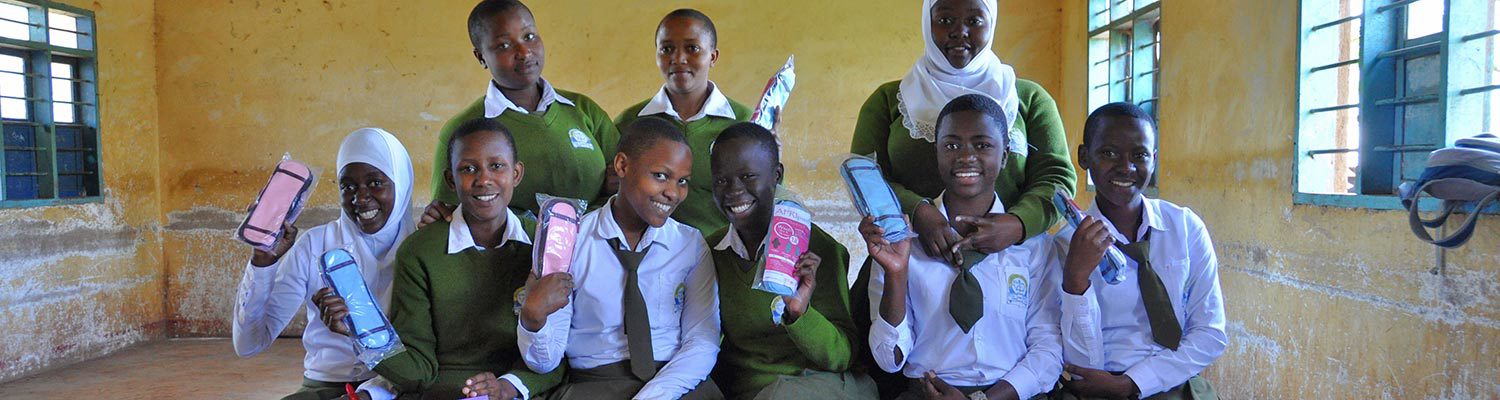
Femme’s Feminine Health Management Program is all about ensuring that schoolgirls have the education and resources they need to manage their monthly cycles in a safe and effective way. The educational component works to provide a deeper understanding of their bodies, and break down the stigma that so often surrounds menstruation.

The distribution component of the program distributes Femme Kits that include reusable menstrual management supplies – namely menstrual cups! Menstrual cups are made out of surgical grade silicone, and are inserted into the vagina to collect, rather than absorb menstrual fluid. 

Menstruation is a huge reason why girls in developing communities miss school, often because they don’t have access to feminine hygiene products, and the alternative methods they resort to are ineffective. Femme distributes menstrual cups because we believe they are the best option for women. Here are a few reasons why:


1. SUSTAINABILITY: Unlike commercial sanitary pads, menstrual cups are reusable. Even better, they can be reused for up to 10 years! This means that women no longer need to spend their hard-earned income on buying sanitary products, and can use the money for things like school fees, shoes, and rent. Providing disposable sanitary pads is the definition of an ineffective band-aid solution: it will only help for one month. By providing menstrual cups, the FHM program is ensuring that these women are set for the next 5-10 years. 
2. ENVIRONMENTALLY FRIENDLY:  It is estimated that the average woman will use around 12,000 tampons in her lifetime – which takes up a lot of room in landfills around the world. In communities such as Nairobi’s Mathare Slum where there is no garbage collection, disposable sanitary supplies end up in the river and streets, causing major hygiene issues. Menstrual cups are easy to keep clean and safe. After her period is complete, it is simply boiled in water for 5 minutes before being put away until next month. In communities where access to potable water is a struggle, menstrual cups require much less than reusable pads. 
3. 12-HOURS OF PROTECTION: This might be the best part – menstrual cups provide 12 hours of comfortable, leak-free protection! So many girls we have spoken to told us that they would leave school in the middle of the day because their schools didn’t have appropriate latrine facilities, or they were teased for leaking. When inserted correctly, a vacuum seal is created which prevents any leaking. And it lasts for twelve hours. This means that girls are able to attend school or work without having to worry! They are able to feel in control of their bodies, which boosts their confidence, their academic performance, and helps them feel clean.
Picture

4. HEALTHIER FOR A WOMAN’S BODY: Tampons and pads are actually filled with a lot of harmful toxins and dyes, which are not healthy for a woman’s body. Without access to safe menstrual management supplies, women will resort to alternative methods such as rags, leaves, tissues, even newspapers and mattress stuffing. Not only do these methods not work, but they are uncomfortable, and extremely unhygienic. They lead to yeast infections, UTIs, and other infections that can lead girls to the hospital. Menstrual cups are very hygienic to use, and help girls feel clean during their monthly cycle (so long as proper hand washing occurs!).
Picture

5. YOU CAN DO ANYTHING: When we ask girls how they feel about the menstrual cup after a few months of use, the word that comes up the most often is “free”. They feel confident, and are able to participate in activities in and out of the classroom. They felt as though they were performing better in school, as they were better able to concentrate. They felt free. 
By distributing menstrual cups, Femme is providing a sustainable and safe alternative to young women. The FHM Program removes the financial burden of menstruation and helps girls feel in control of their bodies. 

Menstrual cups are an amazing option for all women! Visit Ruby Cup to see how you can begin using one today!

To donate a Femme Kit is to give the gift of confidence, and help keep a girl in school – every day of the month!


Note: Girls have the option of selecting either menstrual cups or reusable pads in their Femme Kits, to make sure they have the method that is the most comfortable for them.

Sabrina Rubli